Spanish grammar, explained with pictures › Pronombres interrogativos
A1Spanish questions usually start with a question word that always carries an accent: qué, quién, dónde, cuándo, cómo, cuánto, cuál. They also open with an upside-down question mark: ¿. Learn the words below with their answers and you can hold a first conversation.
Cómo se escriben
- ¿ ?¿Cómo te llamas? What's your name?
- ´¿Qué? ¿Dónde? ¿Cuándo? What? Where? When?
- ↗¿Eres de Santo Domingo? Are you from Santo Domingo?
Pregunta y respuesta
| Pregunta | Respuesta |
|---|---|
 ¿Cómo te llamas?What's your name? |  Me llamo Leo.My name is Leo. |
| ¿De dónde eres?Where are you from? | 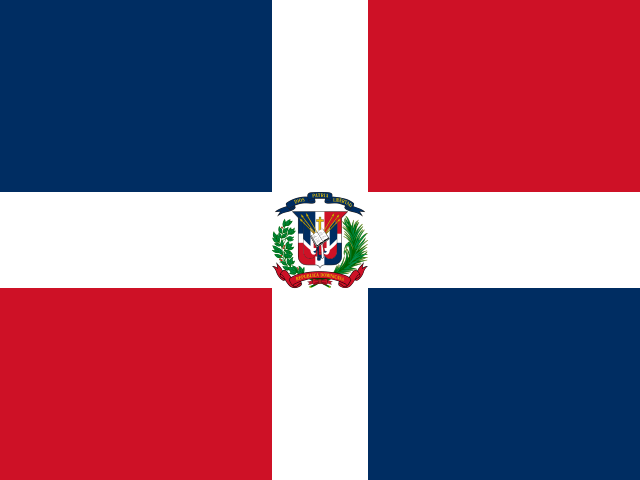 Soy de República Dominicana.I'm from the Dominican Republic. |
| ¿Dónde vives?Where do you live? | Vivo en Santiago.I live in Santiago. |
| ¿Cuántos años tienes?How old are you? | Tengo 21 años.I'm 21 years old. |
¿Por qué? → Porque
- ¿Por qué estudias? — Porque quiero viajar. Why do you study? — Because I want to travel.
- ¿Por qué comes? — Porque tengo hambre. Why do you eat? — Because I'm hungry.
Examples
 ¿Qué? | What? |
 ¿Quién? | Who? |
 ¿Dónde? | Where? |
 ¿Cuándo? | When? |
 ¿Cómo? | How? |
 ¿Cuánto? | How much? |
 ¿Cuál? | Which? · What? |
 ¿Por qué? | Why? |
More examples
These questions are useful in daily life, at work and when travelling. Each one uses a different question word or combination.
- ¿Qué quieres beber? — What do you want to drink?
- ¿Quién es ese chico? — Who is that boy?
- ¿Quiénes vienen a la cena? — Who is coming to dinner? (plural)
- ¿Dónde está la parada del autobús? — Where is the bus stop?
- ¿Adónde vas este verano? — Where are you going this summer?
- ¿De dónde son tus abuelos? — Where are your grandparents from?
- ¿Cuándo empiezan las vacaciones? — When do the holidays start?
- ¿Cómo estás? — How are you?
- ¿Cómo es tu ciudad? — What is your city like?
- ¿Cuánto dinero necesitas? — How much money do you need?
- ¿Cuántas personas hay en tu familia? — How many people are there in your family?
- ¿Cuál es tu color favorito? — What is your favourite colour?
- ¿Cuáles prefieres, los rojos o los azules? — Which ones do you prefer, the red ones or the blue ones?
- ¿Por qué no vienes con nosotros? — Why don’t you come with us?
- ¿Para qué sirve este botón? — What is this button for?
- ¿Con quién vives? — Who do you live with?
- ¿A qué hora sale el tren? — What time does the train leave?
- No sé dónde está mi móvil. — I don’t know where my phone is.
Notice how prepositions go at the start of the question, before the question word: ¿Con quién…?, ¿De dónde…?, ¿A qué hora…?, ¿Para qué…?. In sentence 18, dónde keeps its accent even though there is no question mark, because it introduces an indirect question after no sé.
Note also that quién and cuál have plural forms (quiénes, cuáles), and cuánto agrees with the noun it asks about (cuánto dinero, cuántas personas).
Practise by answering each question about yourself. Answering is the fastest way to fix the meaning of each word in your memory.
Common mistakes
Question words are short, but accents, word order and qué versus cuál cause many errors.
- Wrong: ¿Qué es tu nombre? / Right: ¿Cuál es tu nombre? — before ser + noun, when you ask for one specific item, Spanish uses cuál.
- Wrong: ¿Quién vives con? / Right: ¿Con quién vives? — a preposition can never go at the end; it comes before the question word.
- Wrong: ¿Porque trabajas aquí? / Right: ¿Por qué trabajas aquí? — “why” is two words with an accent; porque is the answer “because”.
- Wrong: ¿Donde está el museo? / Right: ¿Dónde está el museo? — question words always carry a written accent.
- Wrong: ¿Cuánto personas vienen? / Right: ¿Cuántas personas vienen? — cuánto agrees with the noun: cuánto, cuánta, cuántos, cuántas.
- Wrong: Que hora es? / Right: ¿Qué hora es? — Spanish questions open with ¿ and close with ?.
- Wrong: ¿Cómo es el tiempo hoy? / Right: ¿Qué tiempo hace hoy? — to ask about the weather, Spanish uses qué tiempo hace, not cómo es.
A good check: read your question aloud. If you are asking for information, the question word has an accent and the sentence opens with ¿. If you are giving information (because, where, when), the word has no accent: Vivo donde trabajo, Te llamo cuando llegue.
Also watch the word order after the question word. In Spanish the verb normally comes straight after it, and the subject goes after the verb: ¿Dónde trabaja tu hermano?, not ¿Dónde tu hermano trabaja?. Spanish does not need an auxiliary like English “do” or “does”.
How to remember it
| Word | Meaning | Sample answer |
|---|---|---|
| qué | what | Un zumo. |
| quién / quiénes | who | Mi vecina. |
| dónde / adónde / de dónde | where / where to / where from | En el centro. / A la playa. / De Chile. |
| cuándo | when | El viernes. |
| cómo | how / what… like | Bien, gracias. / Es grande. |
| cuánto / cuánta | how much | Diez euros. |
| cuántos / cuántas | how many | Tres hermanos. |
| cuál / cuáles | which / what | El azul. |
| por qué | why | Porque llueve. |
| para qué | what for | Para abrir la puerta. |
Rule of thumb: if it asks, it has an accent. Qué, quién, dónde, cuándo, cómo, cuánto and cuál carry a written accent in direct and indirect questions and in exclamations (¡Qué bonito!). The same words without the accent connect ideas in statements.
For qué or cuál before ser, ask yourself whether you want a definition or a choice: ¿Qué es un pasaporte? asks for a definition; ¿Cuál es tu pasaporte? asks you to pick one.
Finally, learn each question word together with a typical answer, as in the table. The answer reminds you of the meaning: cuándo goes with days and times, dónde with places, cuánto with numbers and prices, por qué with porque.
Cheat sheet
| Qué | Cuál | |
|---|---|---|
| + noun | ¿Qué libro lees? (standard) | rare in Spain; common in Latin America |
| + ser + noun | asks for a definition: ¿Qué es la paella? | asks for one item: ¿Cuál es tu dirección? |
| alone, choosing | ¿Qué quieres? (open choice) | ¿Cuál quieres? (from a known group) |
Yes/no questions need no question word at all: just change the intonation, rising at the end: ¿Tienes hermanos?, ¿Hablas inglés?. The subject can go before or after the verb: ¿Tu hermano trabaja aquí? or ¿Trabaja aquí tu hermano?
Por qué or porque? Por qué (two words, accent) asks “why?”; porque (one word, no accent) answers “because”. El porqué (one word, accent) is a noun: “the reason”.
Polite questions: to sound more polite with strangers, start with a softener and use usted: Perdone, ¿sabe dónde está la estación?, Disculpe, ¿cuánto cuesta este?, ¿Me podría decir qué hora es?. Notice that the question word keeps its accent inside the longer sentence.
Quick check
1. ¿___ te llamas? — Me llamo Ana.
Cómo · Dónde · Cuándo
Answer: Cómo
2. ¿___ vives? — Vivo en La Vega.
Dónde · Qué · Quién
Answer: Dónde
3. ¿___ años tienes? — Tengo 30.
Cuántos · Cuánto · Cuál
Answer: Cuántos
4. ¿___ es ella? — Es mi hermana.
Quién · Qué · Cómo
Answer: Quién
5. ¿___ es tu número? — Es 809-555-0101.
Cuál · Qué · Quién
Answer: Cuál

Practise it free
20 interactive slides with audio, 10 exercises that correct themselves, and games:
- Memory
- Tic-tac-toe
- Escape: open the lock
- Board game
Free: 50 Dominican words you’ll hear on day one
Frequently asked questions
When do I use qué and when cuál?
Before a noun, use qué: “¿Qué película vemos?”. Before ser, use qué to ask for a definition (“¿Qué es un DNI?”) and cuál to ask for a specific item or piece of information (“¿Cuál es tu número de teléfono?”). Alone, cuál means “which one” from a known set: “Hay dos camisas, ¿cuál prefieres?”.
Do question words always have an accent?
Yes, when they ask a question, either direct (“¿Dónde vives?”) or indirect (“No sé dónde vive”), and in exclamations (“¡Qué calor!”, “¡Cómo llueve!”). Without an accent they are connectors in statements: “La casa donde vivo”, “Cuando llego, ceno”, “Creo que sí”. The accent does not change the pronunciation much, but it changes the meaning.
What is the difference between dónde, adónde and de dónde?
Dónde asks about location (“¿Dónde estás?”), adónde asks about direction with verbs of movement (“¿Adónde vamos?”) and de dónde asks about origin (“¿De dónde es tu profesora?”). In everyday speech many people use dónde with ir, but adónde or a dónde is the standard choice for direction.
How do I ask “What is it like?” in Spanish?
Use cómo with ser: “¿Cómo es tu profesor?” (What is your teacher like?), “¿Cómo es la casa?” (What is the house like?). With estar, cómo asks about a state or condition: “¿Cómo está tu madre?” (How is your mother?). Never translate “what… like” with qué.
More lessons
- Ser vs estar: the easy way to tell them apart
- Por vs para: clear rules with pictures and examples
- Preterite vs imperfect in Spanish: when to use each past tense
- Spanish subject pronouns: yo, tú, él, ella, usted…
- Spanish present tense: regular -ar, -er, -ir verbs
- Telling time in Spanish: ¿Qué hora es?
- How to use gustar in Spanish: me gusta, me gustan
- The Spanish present subjunctive: ojalá, quiero que…
- Spanish reflexive verbs: talk about your daily routine
- Spanish numbers: from 0 to a million
- Spanish present progressive: estar + gerund explained
- Ir a + infinitive: the Spanish near future made easy
- Spanish future tense: forms, irregular verbs and uses
- Spanish conditional tense: would in Spanish explained
- Spanish present perfect: he comido, has visto explained
- Spanish commands: the imperative for tú, usted and ustedes
- Spanish stem-changing verbs: e→ie, o→ue, e→i (boot verbs)
- Spanish possessive adjectives: mi, tu, su, nuestro
- Spanish gender and plurals: nouns and adjective agreement
- Spanish articles: el, la, los, las and un, una, unos, unas
- Spanish demonstratives: este, ese, aquel explained
- Spanish comparatives: más que, menos que, tan como
- Spanish direct and indirect object pronouns: lo, la, le, se
- Hay vs estar in Spanish: there is, or where it is?
- Spanish prepositions of place: encima, debajo, al lado
- Spanish imperfect subjunctive: forms and uses (si fuera…)
- Spanish si clauses: if sentences with 3 types explained
- Spanish relative pronouns: que, quien, donde, lo que
Practice activities for this lesson
Play them on their own, print them as worksheets or share them with your students — made with Interactive Learning.
- ¿Qué palabra falta? · Pronombres interrogativos (Multiple choice quiz)
- Une pregunta y respuesta · Pronombres interrogativos (Match up)
- Golpea las palabras para preguntar · Pronombres interrogativos (Whack-a-mole)
- ¿Bien escrita? · Pronombres interrogativos (True or false)
- Ordena la pregunta · Pronombres interrogativos (Put the words in order)
- Pronombres interrogativos: memory (Memory game)
- Pronombres interrogativos: tres en raya (Tic-tac-toe quiz)
- Pronombres interrogativos: abre el candado (Escape: open the lock)
- Pronombres interrogativos: juego de la oca (Board game)