Spanish grammar, explained with pictures › ¿Qué has hecho hoy?
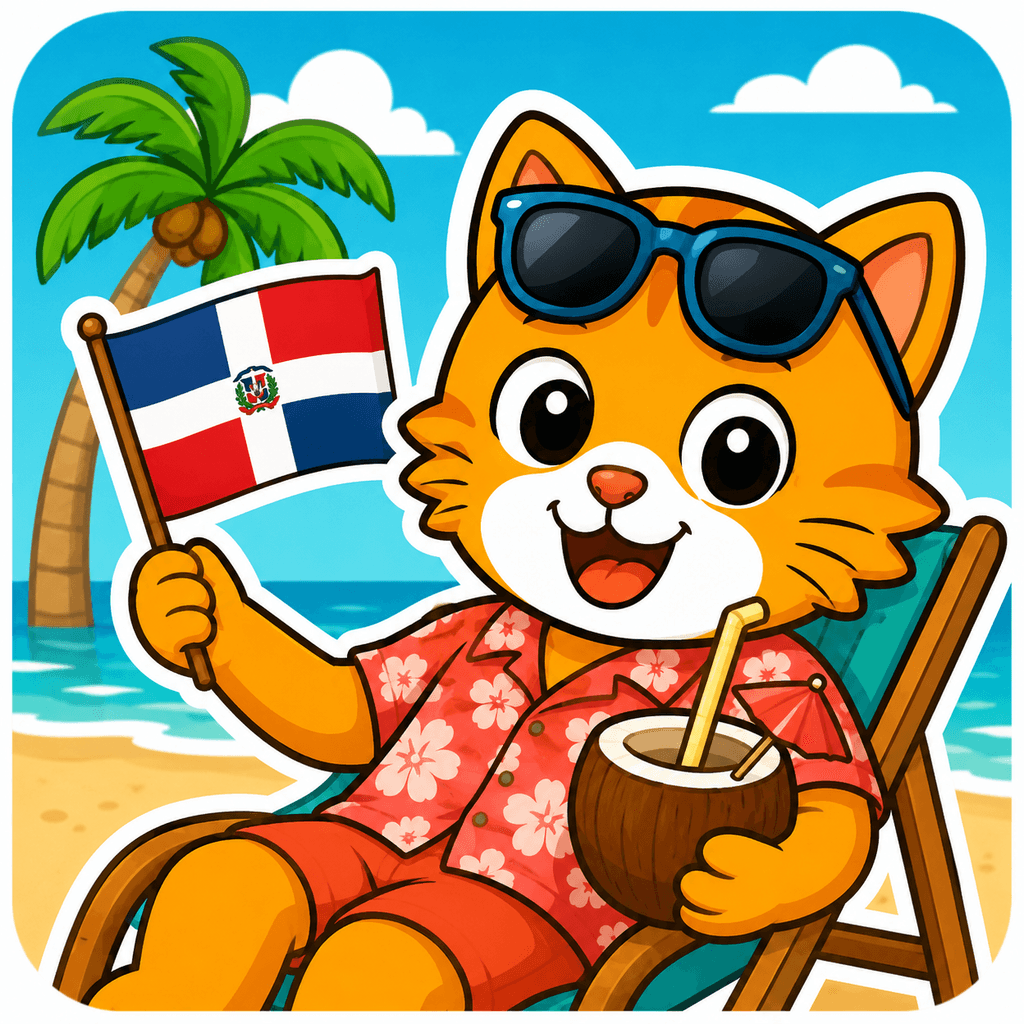
A2The present perfect talks about actions inside a time that is not over yet: today, this week, this year, your whole life. You form it with haber (he, has, ha, hemos, han) + a past participle: he terminado, “I have finished”. The picture shows a day that is still going on.
See it: Hoy he…: el perfecto

Perfecto: pasó en un tiempo que aún no ha terminado (hoy, esta semana). Present perfect: it happened in a time that is not over yet.
Haber + participio
| haber | + participio |
|---|---|
| heI have | comidoeaten |
| hasyou have | viajadotraveled |
| hahe / she has | hechodone |
| hemoswe have | vistoseen |
| hanthey have | vueltocome back |
¿Perfecto o indefinido?
| He comido (tiempo que sigue) | Comí (tiempo terminado) |
|---|---|
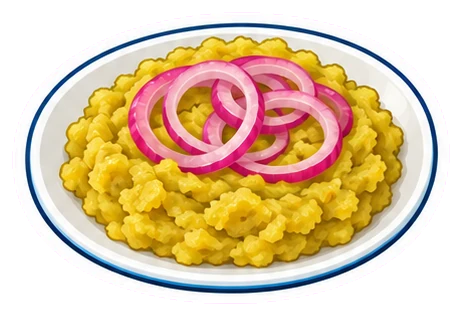 Hoy he comido mangú.Today I've eaten mangú. | Ayer comí mangú.Yesterday I ate mangú. |
| ¿Has estado alguna vez en Samaná?Have you ever been to Samaná? | El año pasado estuve en Samaná.Last year I was in Samaná. |
Examples
| hoy | today |
| esta mañana | this morning |
| esta semana | this week |
| este año | this year |
| ya | already |
| todavía no | not yet |
| alguna vez | ever |
| nunca | never |
More examples
In these examples, look for the time words (ya, todavía no, nunca, esta semana) that often go with the present perfect.
- Esta semana he ido dos veces al gimnasio. — This week I have been to the gym twice.
- ¿Has probado alguna vez la paella? — Have you ever tried paella?
- Todavía no hemos comprado los billetes. — We haven’t bought the tickets yet.
- Ya he leído ese libro. — I have already read that book.
- Mi hermano nunca ha subido a un avión. — My brother has never been on a plane.
- ¿Quién ha abierto la ventana? — Who has opened the window?
- Este año ha llovido muy poco. — It has rained very little this year.
- Alguien ha roto el espejo del baño. — Someone has broken the bathroom mirror.
- ¿Has escrito el correo al profesor? — Have you written the email to the teacher?
- Hoy me he levantado a las seis. — Today I got up at six.
- Mis padres han viajado por toda Europa. — My parents have travelled all over Europe.
- ¿Has visto mis gafas? — Have you seen my glasses?
- Últimamente he dormido muy mal. — Lately I have slept very badly.
- La película ya ha empezado. — The film has already started.
- ¿Qué te ha dicho el médico? — What has the doctor told you?
- Nunca he estado en Japón. — I have never been to Japan.
- Se ha muerto la planta del salón. — The living-room plant has died.
- Hemos descubierto un restaurante buenísimo. — We have discovered a great restaurant.
As you read, notice that the participle is always the same, whoever the subject is: he ido, ha ido, hemos ido, han ido. Only haber changes.
Sentences 2, 5 and 16 talk about life experience: they ask or say whether something has ever happened, without saying when. Sentences 1, 7 and 13 sit inside a period that is not over: this week, this year, lately. Sentences 3, 4 and 14 use ya (already) and todavía no (not yet), two words that very often travel with this tense.
Common mistakes
The present perfect looks like the English one, but the two do not always match. These are the errors that appear again and again.
- Wrong: He ya comido. / Right: Ya he comido. — nothing can go between haber and the participle; ya, nunca and todavía go before or after the whole verb.
- Wrong: Las cartas que he escritas. / Right: Las cartas que he escrito. — with haber the participle never changes for gender or number.
- Wrong: Tengo terminado el informe. / Right: He terminado el informe. — the present perfect is formed with haber, not tener.
- Wrong: He abrido la puerta. / Right: He abierto la puerta. — abrir has an irregular participle; so do hacer (hecho), romper (roto) and ver (visto).
- Wrong: He vivido aquí por cinco años (and I still do). / Right: Vivo aquí desde hace cinco años. — for something that continues now, Spanish uses the present with desde hace or llevar.
- Wrong: Ayer he visto a Juan. / Right: Ayer vi a Juan. — with a finished time (ayer, el lunes pasado, en 2015) use the preterite.
The two last mistakes are about meaning rather than form, and they are the hardest for English speakers. Before you choose the present perfect, ask yourself whether the time you are talking about is finished. If you can name a finished moment, switch to the preterite. If the action continues now, think of the present with desde hace.
How to remember it
Use this rule of thumb: is the time period still open? If you can add “today”, “this week”, “ever” or “yet”, the present perfect fits. If the time is closed and finished (“yesterday”, “last year”), use the preterite.
| Present perfect (open time) | Preterite (closed time) |
|---|---|
| hoy, esta mañana, esta semana | ayer, anoche, la semana pasada |
| este mes, este año | el mes pasado, en 2019 |
| ya, todavía no, alguna vez, nunca | hace dos días, el lunes, aquel día |
| Este verano he trabajado mucho. | El verano pasado trabajé mucho. |
A note on regions: in Spain the present perfect is used a lot for anything that happened today. In most of Latin America people often prefer the preterite for recent actions (Hoy me levanté temprano) and keep the present perfect for experiences and unfinished periods. Both are correct standard Spanish.
A visual trick: picture a box that represents the time period you are talking about. If the box is still open (today, this year, my life), the action lives inside it and you use he, has, ha + participle. If the lid is closed (yesterday, last summer), the action is locked in the past and you use the preterite. Time words are the label on the box.
To practise, write three sentences about your day so far with hoy he…, three about your life with nunca he… or alguna vez he…, and three about yesterday with the preterite. Comparing the groups side by side makes the difference between the two tenses very clear.
Cheat sheet
| haber | Regular participles | Irregular participles |
|---|---|---|
| he | -ar → -ado: hablado, trabajado | abrir → abierto, cubrir → cubierto |
| has | -er → -ido: aprendido, tenido | decir → dicho, hacer → hecho |
| ha | -ir → -ido: salido, dormido | escribir → escrito, romper → roto |
| hemos | leer → leído, oír → oído | morir → muerto, poner → puesto |
| habéis (Spain) | traer → traído, caer → caído | resolver → resuelto, volver → vuelto |
| han | ver → visto, descubrir → descubierto |
Pronouns go before haber: Me lo ha dicho, No te he visto, Se han ido.
Word order with ya and todavía: Ya he comido or He comido ya; Todavía no he comido or No he comido todavía. All four orders are correct, as long as haber and the participle stay together.
Quick check
1. Hoy ___ mucho. (trabajar · yo)
he trabajado · he trabajando · ha trabajado
Answer: he trabajado
2. ¿___ alguna vez en avión? (viajar · tú)
Has viajado · Ha viajado · Has viajando
Answer: Has viajado
3. Todavía no ___ la tarea. (hacer · nosotros)
hemos hecho · hemos hacido · han hecho
Answer: hemos hecho
4. Esta mañana ellos ___ temprano. (salir)
han salido · han salida · ha salido
Answer: han salido
5. Ya ___ esa película. (ver · yo)
he visto · he vido · has visto
Answer: he visto

Practise it free
19 interactive slides with audio, 8 exercises that correct themselves, and games:
- Memory
- Tic-tac-toe
- Escape: open the lock
- Board game
Free: 50 Dominican words you’ll hear on day one
Frequently asked questions
When do I use the present perfect and when the preterite?
Use the present perfect when the action happened in a time period that is still open (today, this week, this year, in my life) or when you talk about experiences without a date. Use the preterite when you mention or imply a finished time: yesterday, last month, in 2010. “Este año he viajado mucho” but “El año pasado viajé mucho”.
Is the present perfect used the same way in Latin America?
Not exactly. In Spain it is the normal tense for anything that happened today. In much of Latin America speakers prefer the preterite for recent finished actions (“¿Ya comiste?”) and use the present perfect for experiences and for situations that still matter now. Both uses are correct, so learn to recognise both.
Does the past participle agree with the subject?
Not in the present perfect. With haber the participle always ends in -o: “Ella ha llegado”, “Las chicas han salido”. The participle only agrees when it works as an adjective, for example with estar or ser: “La puerta está abierta”, “Las cartas fueron escritas”.
How do I say “I have just done something” in Spanish?
Spanish uses acabar de + infinitive: “Acabo de llegar” (I have just arrived), “Acabamos de comer” (We have just eaten). It is very common and replaces the English “have just”. The present perfect with “ahora mismo” is also possible: “Lo he visto ahora mismo”.
Can I put a pronoun between haber and the participle?
No. Haber and the participle always stay together. Object and reflexive pronouns go before haber: “Te lo he dicho”, “Nos hemos divertido”. Negatives also go before the whole verb: “No he terminado”. Adverbs like ya or todavía go before or after the complete form, never in the middle.
More lessons
- Ser vs estar: the easy way to tell them apart
- Por vs para: clear rules with pictures and examples
- Preterite vs imperfect in Spanish: when to use each past tense
- Spanish subject pronouns: yo, tú, él, ella, usted…
- Spanish present tense: regular -ar, -er, -ir verbs
- Telling time in Spanish: ¿Qué hora es?
- How to use gustar in Spanish: me gusta, me gustan
- The Spanish present subjunctive: ojalá, quiero que…
- Spanish reflexive verbs: talk about your daily routine
- Spanish numbers: from 0 to a million
- Spanish present progressive: estar + gerund explained
- Ir a + infinitive: the Spanish near future made easy
- Spanish future tense: forms, irregular verbs and uses
- Spanish conditional tense: would in Spanish explained
- Spanish commands: the imperative for tú, usted and ustedes
- Spanish stem-changing verbs: e→ie, o→ue, e→i (boot verbs)
- Spanish possessive adjectives: mi, tu, su, nuestro
- Spanish gender and plurals: nouns and adjective agreement
- Spanish articles: el, la, los, las and un, una, unos, unas
- Spanish demonstratives: este, ese, aquel explained
- Spanish comparatives: más que, menos que, tan como
- Spanish direct and indirect object pronouns: lo, la, le, se
- Hay vs estar in Spanish: there is, or where it is?
- Spanish question words: qué, quién, dónde, cuándo, cómo
- Spanish prepositions of place: encima, debajo, al lado
- Spanish imperfect subjunctive: forms and uses (si fuera…)
- Spanish si clauses: if sentences with 3 types explained
- Spanish relative pronouns: que, quien, donde, lo que
Practice activities for this lesson
Play them on their own, print them as worksheets or share them with your students — made with Interactive Learning.
- Conjuga · ¿Qué has hecho hoy? (Multiple choice quiz)
- ¿Alguna vez…? · ¿Qué has hecho hoy? (True or false)
- ¿Qué has hecho hoy?: ordena la frase (Put the words in order)
- ¿Qué has hecho hoy?: memory (Memory game)
- ¿Qué has hecho hoy?: tres en raya (Tic-tac-toe quiz)
- ¿Qué has hecho hoy?: abre el candado (Escape: open the lock)
- ¿Qué has hecho hoy?: juego de la oca (Board game)